| Aspect | Emergent | Bolt.new | Lovable |
|--------|----------|----------|---------|
| Starting Price | Free tier; published monthly and annual plan pricing available from the vendor, including standard and professional tiers; enterprise pricing negotiated | Token-based pricing published; token usage increases with project size due to file sync overhead (per vendor pricing documentation) | Free tier; published Pro and Business tier pricing; volume/credit-based billing for higher tiers |
| Target Use Case | Non-technical builders and teams seeking a conversational workflow from prompt to deployed app; internal tools and MVPs with GitHub export for code ownership | Builders accepting token economics and seeking AI-assisted website/app building with explicit token cost drivers | Teams seeking collaborative AI-assisted building with per-plan credit models and team features |
| Key Strength | Vendor describes end-to-end stack (UI, backend, hosting, payments) with GitHub integration for code ownership | Transparent documentation about token drivers and file sync cost implications | Team-oriented tiering and collaboration features in public pricing materials |
| Key Weakness | Community reports of unpredictable credit/usage consumption and agent loop/reliability issues; public claims around production readiness require validation | Token usage can scale with project size and may be difficult for novices to predict | Credit model may create similar predictability concerns; requires validation for larger projects |
Narrative analysis
- Direct competitors and key differentiators
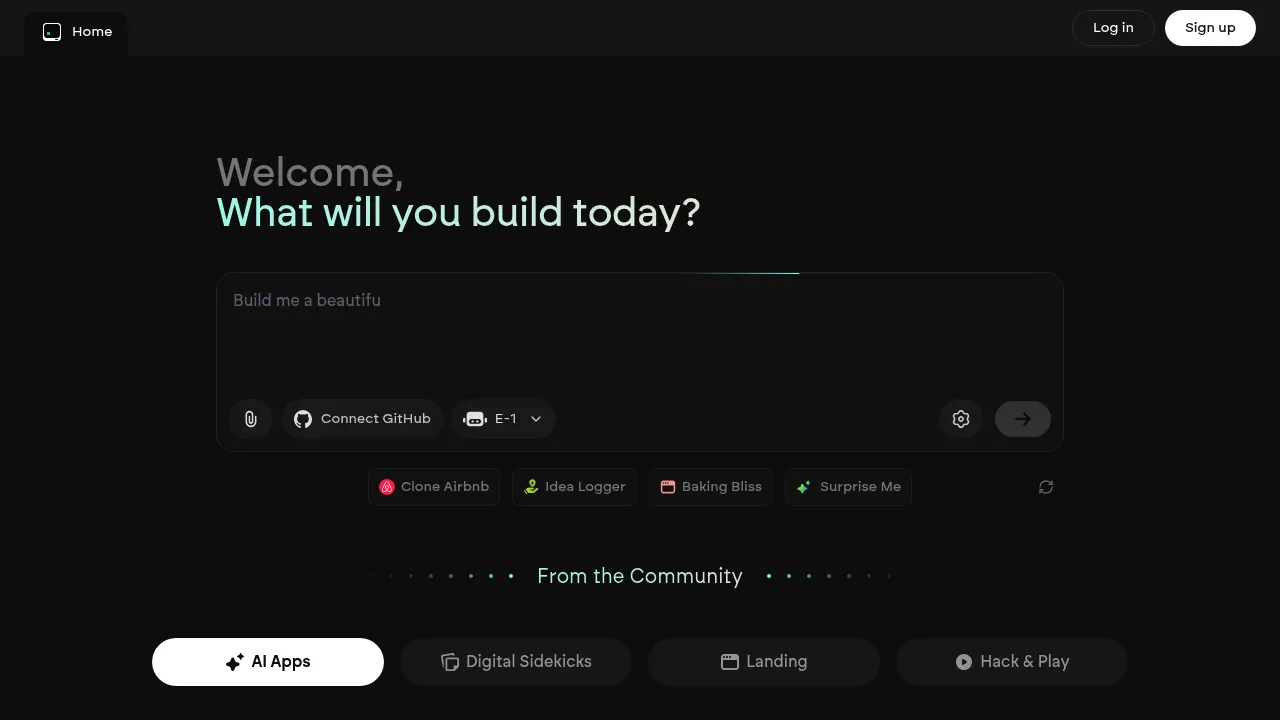
- Emergent positions itself around conversational generation of applications using automated agents and packaging app scaffolding for non-technical builders, with GitHub export for code ownership.
- Bolt.new emphasizes transparent discussion of token usage, with cost drivers linked to project file sync size in its documentation.
- Lovable emphasizes team-friendly plans and tiering for collaboration in public materials.
- Replit Agent emphasizes IDE-native development workflows with deployment features and a developer-focused experience.
- Feature comparison: where Emergent may excel vs lag behind
- Potential strengths (based on vendor claims and some user anecdotes)
- Rapid prototyping from conversational prompts to deployed apps
- GitHub integration for code export and review
- Ability to generate both web and mobile app outputs (vendor claim)
- Potential lags / risk areas (based on user complaints)
- Predictability and controllability of iteration cost
- Reliability and repeatability of agent-driven edits (risk of loops)
- Suitability for complex production-grade backend logic without additional engineering validation
- Pricing comparison: value proposition vs alternatives
- Emergent’s subscription tiers are presented in public pricing tables, but effective cost depends on credits/usage consumed during development and iteration.
- Bolt and Lovable also use usage-based mechanics; Bolt’s documentation highlights file sync size as a primary cost driver, which some buyers may find more explainable.
- The broader market shows that agentic tools commonly shift variable costs to usage-based models, which can create predictability challenges for some customers.
- Customer testimonials comparing Emergent to competitors
- Community discussions indicate some users prefer combining general-purpose models (e.g., ChatGPT/Claude/Gemini) with manual deployment for greater control, while others value the integrated conversational-to-deployment approach.
- Market share and adoption trends
- Press reports include vendor-reported adoption metrics; these are vendor claims and were not audited in the scope of this research.
- When customers choose competitors instead (and why)
- Developers choose developer-first tools (Cursor, Replit, Vercel) when they require direct code control, debugging, and lower variability in operational costs.
- Teams choose alternatives with clearer governance and predictable cost controls when those factors are priorities.