Attention
AI NativeThe AI Revenue Operating System
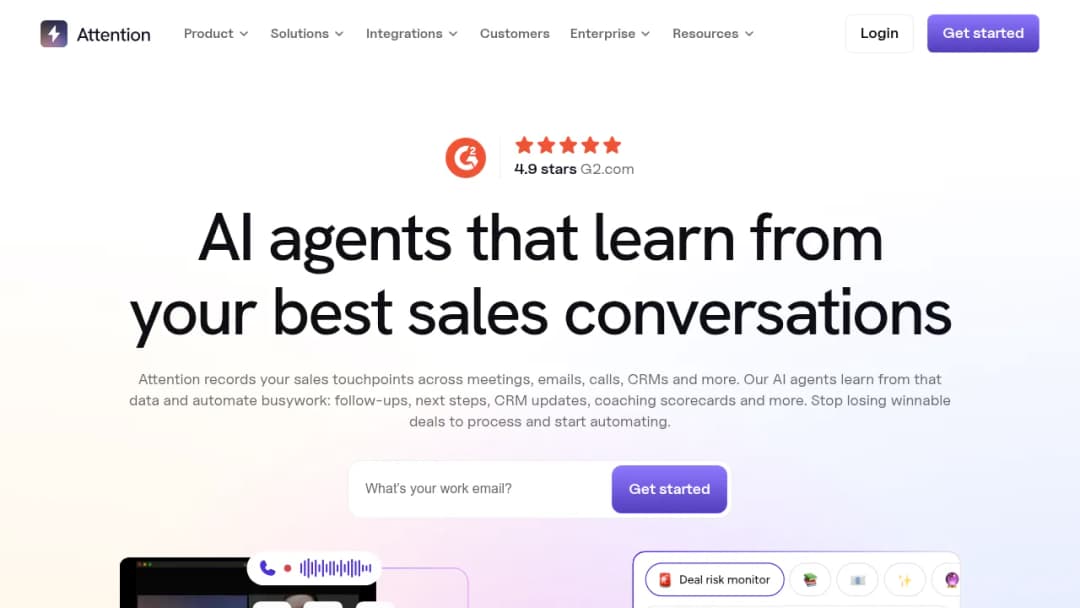
The AI Revenue Operating System
Published Oct 12, 2026
Vendor-published claims include statements such as:
These items are vendor-selected claims; underlying methodologies and measurement periods are not disclosed and should be validated in pilot evaluations.
Common themes in independent reviews and excerpts include:
From community discussions and aggregated cons:
Get a comprehensive analysis of Attention including market position, competitive landscape, adoption trends, and peer benchmarks.
Download full report →Representative paraphrased positive reviewer comment:
Representative paraphrased constructive reviewer comment:
Representative paraphrased mixed reviewer comment:
A public discussion comparing Attention to incumbent vendors surfaced typical buyer concerns:
This thread is a low-sample data point but highlights adoption risks: configuration burden, trust in automation, and user experience.
Vendor case materials highlight outcomes such as customers switching from incumbent vendors, time-savings, and deal-velocity improvements.
Example vendor-claimed outcomes presented on comparison pages include:
Critical evaluation: These metrics are self-reported by vendor-cited customers. The baseline, calculation methods, and measurement periods are not disclosed. Treat these as directional data points useful for designing pilot KPIs (e.g., measure CRM field completeness and seller admin time before and after a pilot).
Attention is a B2B revenue intelligence and conversation intelligence platform that converts sales conversations (calls/meetings) into structured outputs for CRM updates, coaching scorecards, searchable voice-of-customer insights, and workflow automations (referred to by the vendor as AI Sales Agents). The product is designed to reduce seller administrative time (notes, follow-ups, CRM hygiene) and to help RevOps and Enablement leaders standardize coaching and reporting across teams.
Attention describes its capabilities as including: (1) call capture, transcription, and summaries; (2) AI-driven coaching scorecards (e.g., MEDDIC/BANT or custom frameworks); (3) cross-call analysis and search; and (4) CRM automation and workflow agents integrated into common go-to-market tools.