Chili Piper
Chili Piper is a business-to-business meeting automation and inbound conversion platform that combines scheduling links, lead routing and distribution logic, and CRM-integrated workflows to convert inbound interest into booked meetings.
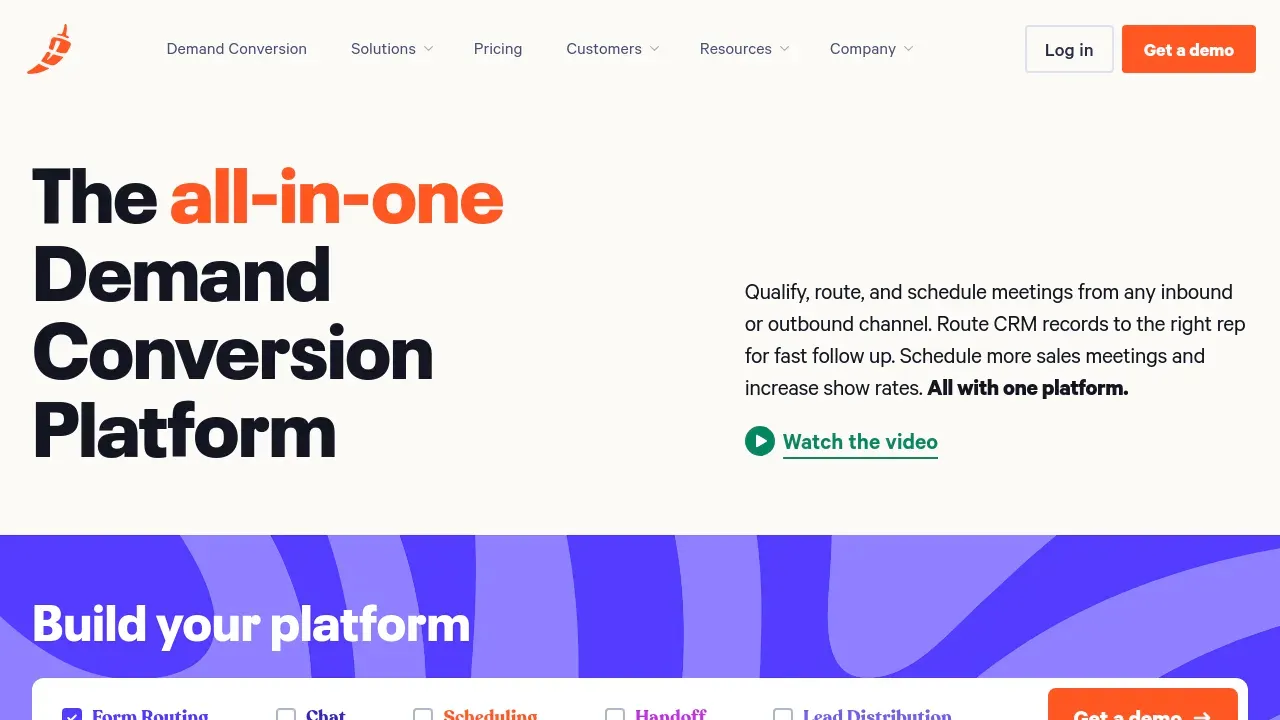
Chili Piper is a business-to-business meeting automation and inbound conversion platform that combines scheduling links, lead routing and distribution logic, and CRM-integrated workflows to convert inbound interest into booked meetings.
Published Oct 14, 2026
Reasons reviewers and buyers cite for adopting the product include:
Get a comprehensive analysis of Chili Piper including market position, competitive landscape, adoption trends, and peer benchmarks.
Download full report →Organizations that only require basic scheduling links and do not need routing or CRM logging; a simpler scheduling tool may be more cost-effective.
Organizations without RevOps or administrative capacity to manage routing logic and ongoing configuration; reported admin dependency can increase operational overhead.
Organizations with highly seasonal or unpredictable inbound lead volumes that prefer fixed per-seat pricing rather than volume-based platform fees.
Teams that require extremely self-serve configuration for non-technical users; some reviewers report that even small changes may require experienced administrators.
Competitive advantages are context-dependent; organizations seeking pricing simplicity and minimal admin overhead may prefer alternative scheduling products.
Critical evaluation summary:
Chili Piper is a business-to-business meeting automation and inbound conversion platform that combines scheduling links, lead routing/distribution logic, and CRM-integrated workflows to convert inbound interest (web forms, chat, outbound sequences, etc.) into booked meetings. Functionality commonly used includes round-robin routing, ownership rules, qualification filters, and CRM logging.
Core products described by the vendor and on review sites include:
Chili Piper targets revenue operations, marketing operations, sales operations, SDR/BDR organizations, and account executive teams who prioritize rapid response to inbound leads, routing governance, and CRM-based meeting attribution. The product combines scheduling, routing, and reporting in a single product set.
This positioning indicates suitability for organizations with: