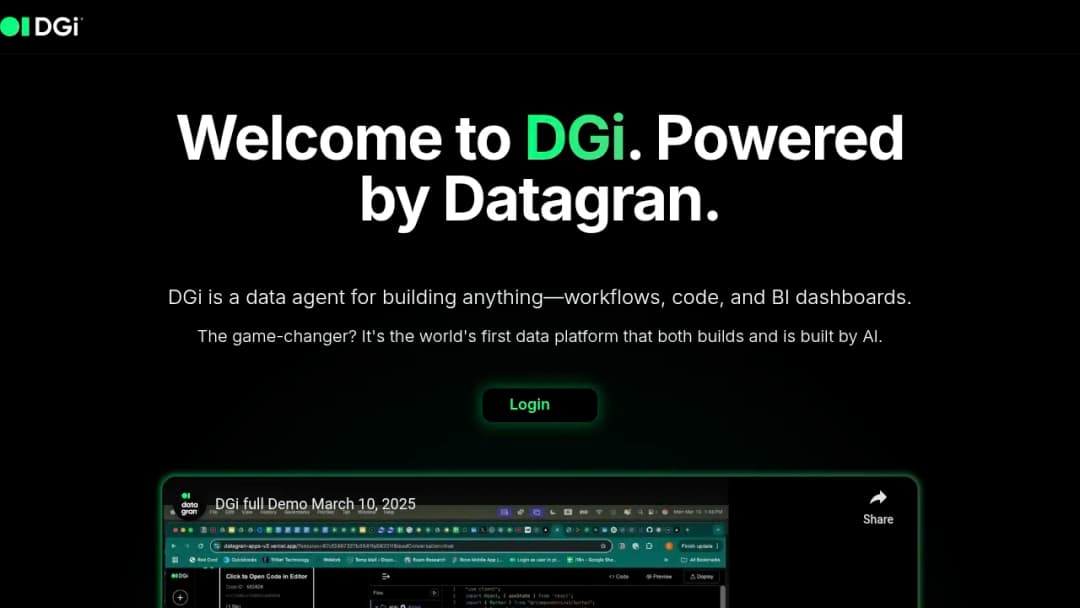
Datagran is presented by the vendor as an intelligence layer for AI agents that connects agents to business and marketing data sources and APIs, manages long- and short-term memory (context compaction and vector storage), and provides governance and observability controls for agent actions. Vendor materials highlight: (1) pre-built integrations to systems such as Meta/Facebook Ads, Google Ads, Salesforce, Postgres/Supabase, and similar platforms; (2) persistent, queryable memory layers; and (3) an AI Interaction Controller (AIC) that supports risk scoring, policy enforcement, approvals, and audit logging/observability of agent actions.
The product appears to have evolved from earlier positioning focused on marketing optimization into a broader agent middleware and context-management offering. Older third-party listings and reviews reference historical ad-optimization functionality, while newer vendor messaging emphasizes agent memory and control features.
Core jobs-to-be-done:
- Provide AI agents controlled access to marketing and business systems via proxied API access to avoid exposing raw OAuth tokens to client applications.
- Reduce repeated data fetching by compiling data into a persistent memory layer.
- Provide governance: action approvals, spend limits, safety controls, and action traces for auditability.
Primary target users (inferred from positioning and integrations):
- Teams building AI agents that operate on marketing systems (ad accounts, CRMs).
- Product and engineering teams that require secure OAuth/token handling, policy guardrails, and auditability for agentic actions.
- Marketing operations and growth teams experimenting with AI-driven campaign execution, especially where earlier ad-optimization features remain relevant.