Fiber AI
AI NativeThe freshest data APIs for AI sales, recruiting, & growth products.
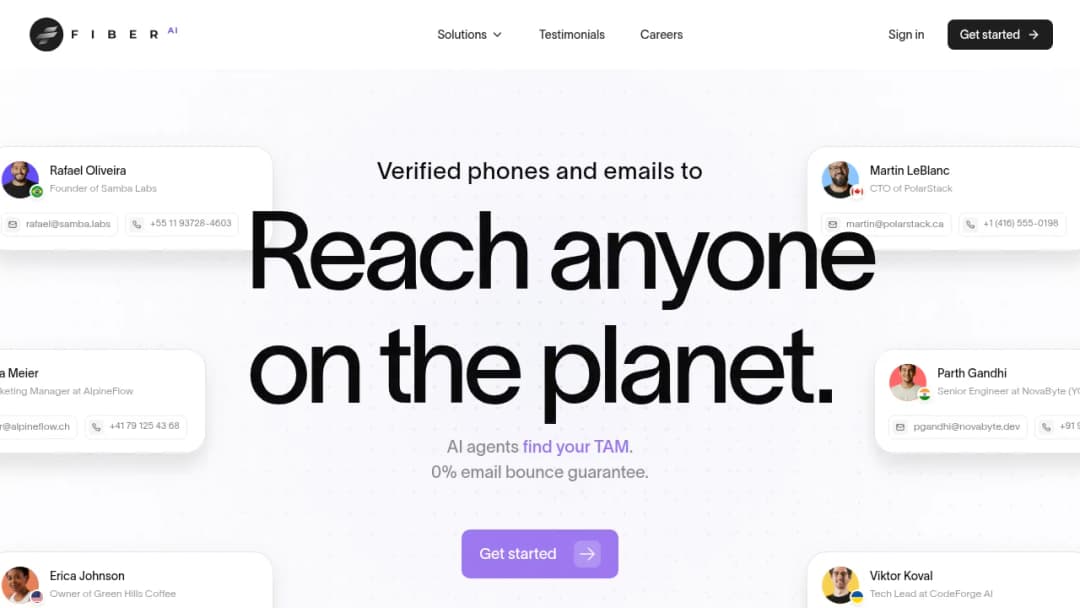
The freshest data APIs for AI sales, recruiting, & growth products.
Published Oct 15, 2026
| Aspect | Fiber AI (fiber.ai) | Apollo.io | ZoomInfo |
|---|---|---|---|
| Starting Price | Published pricing available from the vendor; third‑party write‑ups provide indicative entry‑level pricing (verify with vendor) | Published per‑seat pricing available from the vendor; third‑party sources cite mid‑market per‑user tiers (verify with vendor) | Quote‑based enterprise pricing; typically positioned at higher, enterprise‑level price points (quote required) |
| Primary use case | Developers/RevOps building AI agents, enrichment pipelines, tracking signals (job changes) | SMB–midmarket teams that want self‑serve prospecting + sequences + engagement in one | Enterprise teams needing broad dataset coverage, intent, org charts, and tight CRM integration |
| Key Strength | API‑first data access designed to support integrations with automation/agent systems; tracking workflows (e.g., job changes) | All‑in‑one workflow (database + outreach/engagement features) | Broad enterprise dataset + intent modules + established procurement/security posture |
| Key Weakness | Limited public proof (limited review footprint), engineering effort; regionally restricted authorized usage in vendor Terms | Credit system complexity and potential hidden costs; data accuracy debates in community | Price opacity and enterprise‑scale contracts; users commonly report concerns about cost and data freshness |
Direct competitors and their key differentiators
Feature comparison: where does Fiber AI excel vs lag behind?
Pricing comparison: value proposition vs alternatives
Customer testimonials comparing Fiber AI to competitors
Market share and adoption trends