Workspace
    • Briefing
    • Ask Airframe
    Transformation
    • Audit
    Your Stack
    • Registry
    • Finance
    • Context
    Discover
    Powered by Airframe
    1. Research
    2. /
    3. Products
    4. /
    5. GainFront
    GainFront

    GainFront

    Modern Procurement for Today's Business
    Est 2014|Raised $3M|31 Ref Customers
    LinkedIn 2K|Web traffic 5K|FTEs 34|HQ Palo Alto, California, US
    MarketsSource-to-PaySource-to-ContractProcure-to-PaySupplier Relationship Management (SRM) and Vendor Management (VRM)
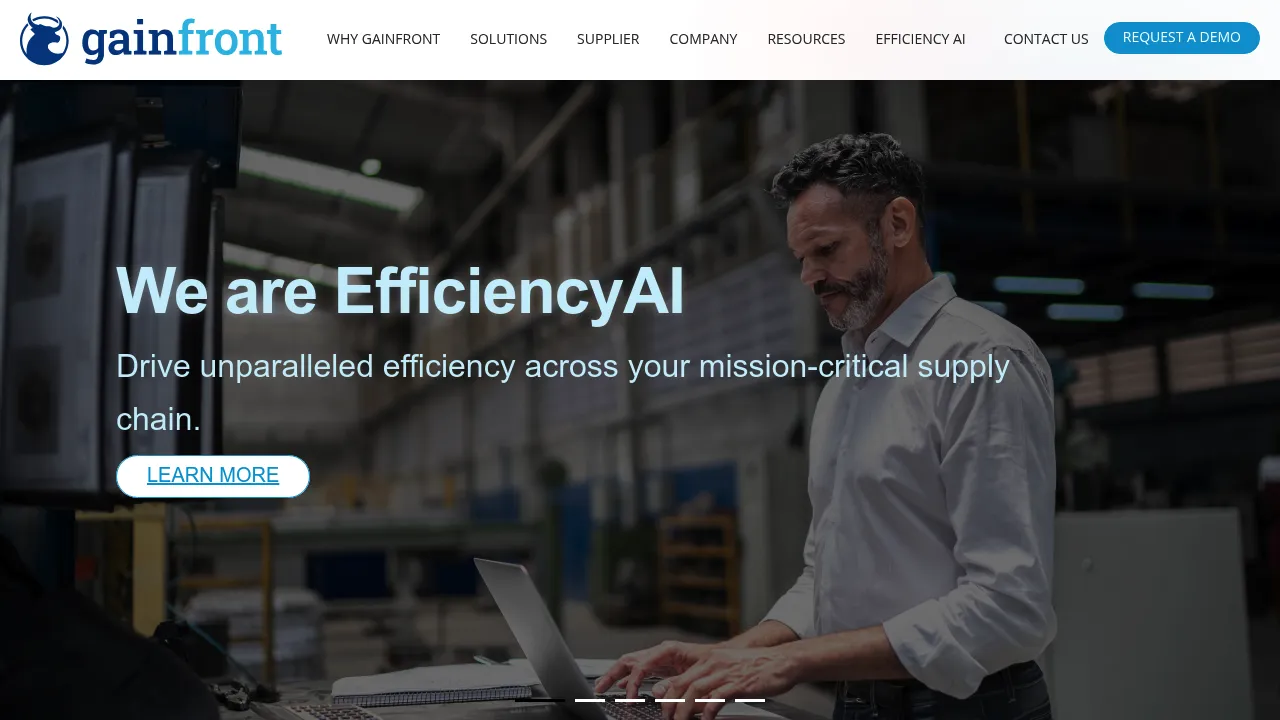
    GainFront screenshot
    FirmCompareTractionAnalysisAdvocates

    Insights

    All insightsAccountingFinanceSoftwareCustomer experience

    Benchmarks

    The Software LeaderboardMethodology

    Tools & data

    Market ExplorerStudioRegistry

    Company

    AboutCareers

    Legal

    Privacy PolicyTerms of Service

    © 2026 Airframe, Inc. All rights reserved.

      Published Oct 15, 2026

      01Common complaints

      Scenarios where alternatives may be more appropriate: 1. Strict security/compliance procurement gates: organizations that will not proceed without publicly available SOC 2 or ISO documentation, or that require specific certifications for vendor onboarding, should consider larger vendors with formal trust centers. 2. Ultra-complex ERP landscapes: organizations that need many pre-built connectors and certified integration partners for a broad set of enterprise systems may reduce integration risk by choosing more established suites (for example, SAP Ariba, Coupa, Ivalua, JAGGAER). 3. Requirement for self-serve pricing and trials: GainFront’s public materials indicate a sales-led engagement model; organizations that need immediate pricing transparency may prefer tools with published tiers. 4. Performance-sensitive global rollouts: reports of slowness and intermittent non-responsiveness suggest organizations planning large rollouts should conduct rigorous performance testing and reference checks.

      Deal disqualifiers (poor fit)

      • Organizations that require publicly documented SOC 2 / ISO certifications prior to vendor engagement
      • Organizations that require documented hyperscale performance and a large public reference base
      • Organizations that require extensive pre-built integrations across many niche systems without additional integration work

      Known issues reported by users

      • Performance and slowness in some workflows
      • Inconsistent ease-of-use across modules
      • Occasional bugs and data gaps
      • Spend data requiring manual correction in some cases

      Vendor-acknowledged limitations / roadmap

      • Public roadmap details were not clearly documented in the sources reviewed.

      Security/compliance gaps (public documentation)

      • Security certifications (SOC 2 / ISO) were not publicly documented in the materials reviewed.

      02Why they buy

      Strengths validated by user feedback

      • Supplier diversity and Tier-2 reporting are frequently cited as a primary differentiator by reviewers.
      • Customer support responsiveness and willingness to customize implementations are commonly reported as strengths.

      Differentiators described in vendor materials (to validate during evaluation)

      • Branded AI features described as supporting RFP workflows and analytics (referred to as EfficiencyAI).
      • A supplier discovery database and vendor-provided indices or metrics.

      Where competitors have clear advantages

      • Public trust documentation, security transparency, and analyst coverage are more extensive for larger competitors.
      • Ecosystem and integration breadth tend to be larger with more mature suites and broader partner networks.

      03Field reports

      Review footprint (scale and representativeness)

      • Capterra: very highly rated on Capterra.
      • GetApp (Gartner Digital Markets network): very highly rated on GetApp.
      • G2: limited review volume on G2.

      This is a small review base relative to major procurement suites; conclusions should be treated as indicative rather than definitive.

      Positive sentiment themes (what customers cite)

      Commonly reported positive themes include: - Customer support responsiveness and perceived helpfulness. - Supplier diversity and Tier-2 reporting functionality as a key differentiator for some customers. - Customization and flexibility in dashboards and onboarding. - Modular platform design that allows staged deployments. Illustrative paraphrased reviewer comments: - A supplier diversity professional indicated the solution positively affected spend analytics and praised vendor support responsiveness. - A supply chain sustainability and supplier diversity manager highlighted Tier-2 reporting as a decisive functionality and a significant factor in selection. - A reviewer at a large enterprise noted collaborative engagement during implementations and described dashboard customization as useful.

      Negative sentiment themes (criticisms and complaints)

      Recurrent criticisms include: - Usability friction and workflow confusion in some areas of the UI. - Performance issues such as slowness or intermittent non-responsiveness. - Bugs and occasional data issues, including missing spend entries that required correction. - Integration limitations with some third-party systems. Illustrative paraphrased reviewer comments: - One reviewer described parts of the interface as confusing and noted intermittent slowness and integration challenges. - A reviewer reported occasional software bugs. - A GetApp reviewer reported missing spend that was corrected after notification to support.

      Reasons for selection cited by customers

      From reviews, the most specific reasons for choosing GainFront center on:

      • Tier-2 supplier diversity reporting and reduced manual reporting effort across customers.
      • Perceived responsiveness of vendor support and willingness to customize the product.

      Potential churn signals

      Direct switching narratives were limited in the sources reviewed. However, common drivers of churn in procurement suites that align with reported complaints include:

      • Persistent performance or latency issues and workflow friction.
      • Integration gaps in complex ERP landscapes.
      • Requirements for greater configurability than the platform can deliver without additional vendor support.

      Vendor-site testimonials (not independently verified)

      GainFront’s website includes named/role-based testimonials and references to large enterprises in some review excerpts. These are marketing-selected and may not represent typical outcomes.

      Quantified outcomes: limited independent validation

      • Vendor-published claims include quantified time savings for RFP-related tooling and supplier profile visibility improvements. Methodology, baseline definitions, and sample sizes are not disclosed in the public excerpts reviewed.

      Recommendation for procurement teams: request the underlying methodology (sample size, baseline process, measurement period, definitions) and ask for customer references that achieved similar outcomes in comparable environments.

      04Best fit

      Company sizes

      • Likely best fit: mid-market to enterprise organizations with formal procurement operations.

      Industries / verticals

      Reported use cases include pharmaceuticals, IT services, telecom, and health/wellness.

      Roles and personas

      • Procurement leadership (CPO, VP Procurement)
      • Strategic sourcing managers
      • Supplier diversity and sustainability managers
      • Procurement operations / P2P owners
      • Contract managers
      • IT/ERP integration stakeholders

      Pain points addressed

      • Manual supplier diversity reporting (including Tier-2 reporting)
      • Fragmented procurement systems
      • Limited spend visibility across business units and geographies
      • Supplier onboarding, risk, and compliance management
      • The need to incorporate ESG requirements into procurement processes

      Qualification criteria (good fit)

      • Organizations that can commit resources to integration and data governance
      • Organizations that value responsive vendor support and are open to customization
      • Organizations where supplier diversity and Tier-2 reporting are high-priority requirements

      05The pitch

      What the product does (objective value proposition)

      GainFront is a supplier lifecycle management (SLM) and broader source-to-pay / procure-to-pay suite intended for procurement teams that need to manage supplier onboarding, sourcing events (RFP/RFQ), contracts, spend visibility, supplier risk/performance, and ESG/diversity reporting within a single platform. The vendor markets a branded feature called EfficiencyAI, which it describes as applying generative AI across procurement workflows (for example, RFP creation and analysis, spend categorization, and supplier discovery signals). Key modules identified in vendor materials and third-party summaries include supplier relationship management (onboarding, performance scorecards, risk monitoring), strategic sourcing (RFP management), contract lifecycle management (CLM), spend management, supplier discovery database, procure-to-pay automation (approvals/PO/invoicing/payment), and CSR/ESG/diversity tracking.

      Target market and positioning

      - Primary target: mid-market to enterprise procurement organizations, particularly those that require supplier diversity / Tier-2 reporting and ESG reporting alongside traditional procurement operations. - Positioning: a modular, AI-enabled supplier lifecycle management suite designed to integrate with finance/ERP systems and to support both operational procurement and compliance/reporting-heavy supplier programs. Statements about AI capability are vendor-provided and should be validated during evaluation.

      Get a comprehensive analysis of GainFront including market position, competitive landscape, adoption trends, and peer benchmarks.

      Download full report →

      Scenarios where alternatives may be more appropriate:

      1. Strict security/compliance procurement gates: organizations that will not proceed without publicly available SOC 2 or ISO documentation, or that require specific certifications for vendor onboarding, should consider larger vendors with formal trust centers.
      2. Ultra-complex ERP landscapes: organizations that need many pre-built connectors and certified integration partners for a broad set of enterprise systems may reduce integration risk by choosing more established suites (for example, SAP Ariba, Coupa, Ivalua, JAGGAER).
      3. Requirement for self-serve pricing and trials: GainFront’s public materials indicate a sales-led engagement model; organizations that need immediate pricing transparency may prefer tools with published tiers.
      4. Performance-sensitive global rollouts: reports of slowness and intermittent non-responsiveness suggest organizations planning large rollouts should conduct rigorous performance testing and reference checks.

      Commonly reported positive themes include:

      • Customer support responsiveness and perceived helpfulness.
      • Supplier diversity and Tier-2 reporting functionality as a key differentiator for some customers.
      • Customization and flexibility in dashboards and onboarding.
      • Modular platform design that allows staged deployments.

      Illustrative paraphrased reviewer comments:

      • A supplier diversity professional indicated the solution positively affected spend analytics and praised vendor support responsiveness.
      • A supply chain sustainability and supplier diversity manager highlighted Tier-2 reporting as a decisive functionality and a significant factor in selection.
      • A reviewer at a large enterprise noted collaborative engagement during implementations and described dashboard customization as useful.

      Recurrent criticisms include:

      • Usability friction and workflow confusion in some areas of the UI.
      • Performance issues such as slowness or intermittent non-responsiveness.
      • Bugs and occasional data issues, including missing spend entries that required correction.
      • Integration limitations with some third-party systems.

      Illustrative paraphrased reviewer comments:

      • One reviewer described parts of the interface as confusing and noted intermittent slowness and integration challenges.
      • A reviewer reported occasional software bugs.
      • A GetApp reviewer reported missing spend that was corrected after notification to support.

      GainFront is a supplier lifecycle management (SLM) and broader source-to-pay / procure-to-pay suite intended for procurement teams that need to manage supplier onboarding, sourcing events (RFP/RFQ), contracts, spend visibility, supplier risk/performance, and ESG/diversity reporting within a single platform. The vendor markets a branded feature called EfficiencyAI, which it describes as applying generative AI across procurement workflows (for example, RFP creation and analysis, spend categorization, and supplier discovery signals).

      Key modules identified in vendor materials and third-party summaries include supplier relationship management (onboarding, performance scorecards, risk monitoring), strategic sourcing (RFP management), contract lifecycle management (CLM), spend management, supplier discovery database, procure-to-pay automation (approvals/PO/invoicing/payment), and CSR/ESG/diversity tracking.

      • Primary target: mid-market to enterprise procurement organizations, particularly those that require supplier diversity / Tier-2 reporting and ESG reporting alongside traditional procurement operations.
      • Positioning: a modular, AI-enabled supplier lifecycle management suite designed to integrate with finance/ERP systems and to support both operational procurement and compliance/reporting-heavy supplier programs. Statements about AI capability are vendor-provided and should be validated during evaluation.