Merlin AI
AI NativeMerlin AI is a browser-extension-first AI copilot that provides an in-page sidebar to summarize web pages, rewrite text, answer questions, and route prompts to multiple underlying models via a single subscription.
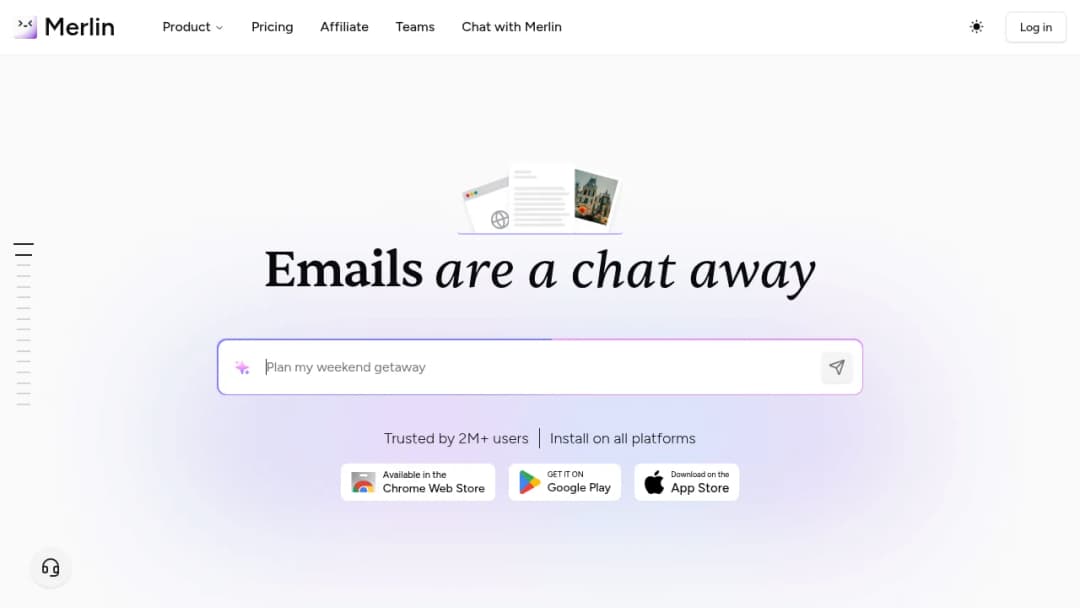
Merlin AI is a browser-extension-first AI copilot that provides an in-page sidebar to summarize web pages, rewrite text, answer questions, and route prompts to multiple underlying models via a single subscription.
Published Sep 29, 2026
Get a comprehensive analysis of Merlin AI including market position, competitive landscape, adoption trends, and peer benchmarks.
Download full report →Scenarios where alternatives are better
Red flags in buying process
Current limitations acknowledged by the vendor
Roadmap / not-yet-available features
Scale limitations
Security/compliance gaps
API limitations or integration constraints
Competitive advantages validated by customer feedback (not just vendor claims)
Unique features and capabilities competitors lack
Differentiation based on reviews
Areas where competitors clearly have advantages
Review-platform signals (mixed and sometimes inconsistent)
Community feedback patterns (Reddit)
Positive feedback themes (from review summaries and marketplace listings)
Why customers chose this product over alternatives
Why some customers left for competitors (churn reasons)
Availability of credible case studies
Critical evaluation
Company sizes
Industries / verticals
Roles and personas
Pain points addressed
Qualification criteria (great fit)
Deal disqualifiers (poor fit)
What the product does (core value proposition in objective terms)
Target market and market positioning
Company background (founding year, HQ, key leadership)
Funding and growth: investment rounds, acquisitions, estimated customer count/revenue if public
Pricing model with specific tiers and costs where available
Total cost of ownership considerations (implementation, training, hidden costs)
Key competitors in the space (list 4-6 direct alternatives)