Published Oct 15, 2026
Numeric scale limits are not publicly documented; practical limitations typically stem from asset governance, analytics/reporting usability with large libraries, and permissioning/organizational structure complexity.
Based on review patterns and product positioning, buyers appear to choose Consensus when they need:
Consensus documentation describes DemoBoard creation, including:
Implication: playlist constraints and branching models may influence how complex product narratives are packaged, particularly for platform products with many modules.
Most relevant where product complexity and buying committees are common:
Get a comprehensive analysis of Consensus including market position, competitive landscape, adoption trends, and peer benchmarks.
Download full report →Requirement for month-to-month flexibility or low-commitment trials
Primary need for high-fidelity sandbox/live demo environments
Inability to sustain ongoing demo content maintenance
Buyer segments sensitive to pre-viewing friction
Asset management tolerance is low
Public review data less frequently contains explicit churn rationales. Likely churn drivers inferred from complaints include:
Analyst note: For explicit churn reasons, buyers should request reference calls, renewal notes, or win/loss data—such information is rarely public.
Common themes across Capterra, G2, and TrustRadius:
Examples (direct quotes):
Recurring criticism themes:
Glitches / instability in extensions and after interface changes
Library and content management at scale
Editing and customization limitations
Pre-viewing friction
Vendor materials include quantified impact claims presented as vendor-reported outcomes, such as improvements in deal size, deal counts, and sales cycle length.
Examples of vendor-claimed statements include references to increased deal sizes, more deals, and shorter sales cycles. These statements should be treated as vendor-published and validated through customer references and methodology review.
Critical evaluation:
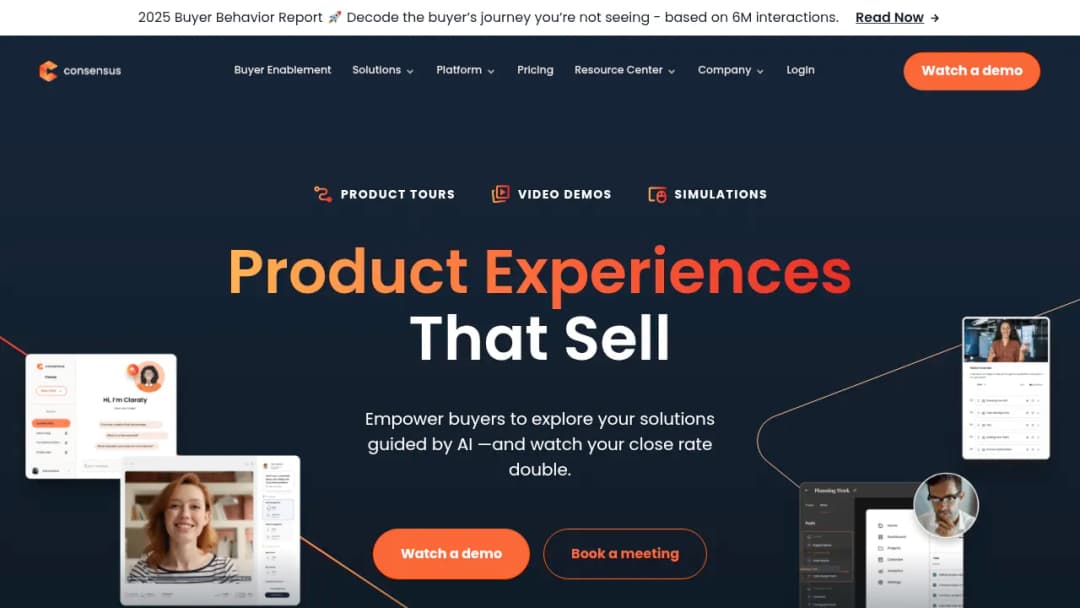
Consensus is a B2B product experience platform that enables go-to-market (GTM) teams to provide on-demand, buyer-led product experiences (video demos, interactive tours, and simulations) and capture engagement analytics (who watched what, when, and for how long) to assist with lead qualification and deal progression. The central workflow packages demo assets into shareable "DemoBoards" (personalized experiences for one or more stakeholders) and records stakeholder engagement via reporting ("Demolytics").