- What the product does (core value proposition in objective terms)
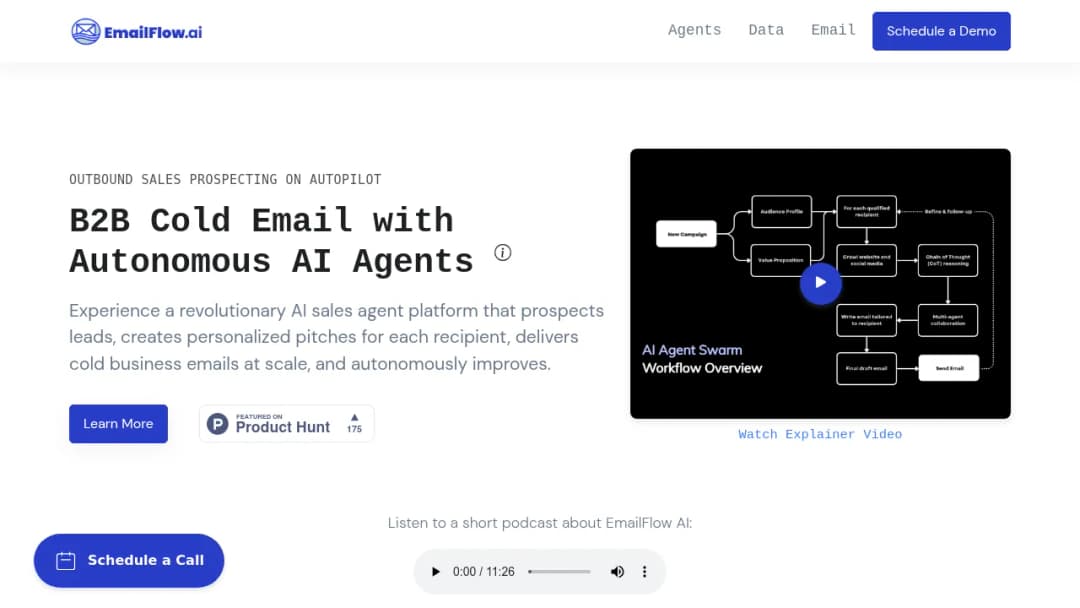
- EmailFlow.ai is presented by vendor materials as an email marketing platform that uses artificial intelligence to generate on-brand emails from prompts, manage lists and segments, run campaigns and automations, and provide managed sending via Amazon SES. The managed sending option removes the need for customers to supply their own SMTP credentials or AWS SES credentials when using that service option.
- Note on naming/positioning ambiguity
- Public sources indicate two distinct "EmailFlow" concepts in public materials:
- EmailFlow.ai / emailflow.ai: described in vendor materials as an AI-focused newsletter/email platform with integrated sending infrastructure.
- EmailFlow.ai (older positioning): previously described in some listings as a B2B lead generation / cold outreach product with a claimed business email database and SMTP services.
- This dual positioning may create ambiguity for buyers evaluating use-case fit, data provenance, and compliance.
- Target market and market positioning
- Primary (based on current emailflow.ai site and documentation)
- Small and mid-market marketing teams that seek:
- AI-assisted email creation workflows
- Rapid setup for campaigns and automations
- Vendor-managed sending via Amazon SES to avoid operating their own SES account
- Secondary/legacy (based on older Product Hunt positioning)
- B2B sales and lead-generation users interested in cold outreach capabilities, lead databases, and combined email infrastructure.
- Company background (founding year, HQ, key leadership)
- Publicly accessible sources reviewed for this report do not clearly establish the legal entity name, founding year, headquarters, or an executive leadership roster.
- Some third-party trust/review sites surface identity signals but also note gaps in verifiable team information.
- Funding and growth: investment rounds, acquisitions, estimated customer count/revenue if public
- No independently verifiable funding rounds, acquisitions, or revenue figures were identified in accessible sources during this research.
- Listing activity (e.g., Product Hunt) shows moderate interest but is not evidence of customer count or revenue.
- Pricing model with specific tiers and costs where available
- Public documentation lists self-serve tiers with the following tiers:
- Free tier available
- Published entry-level tier pricing
- Published mid-tier pricing
- Published higher-tier pricing
- Published enterprise-tier pricing
- Quotas are described along dimensions such as AI token usage, monthly email volume, contact counts, team members, and fair-use send rates.
- Total cost of ownership considerations (implementation, training, hidden costs)
- Potentially lower initial setup effort compared with tools that require customers to provision and manage their own Amazon SES accounts.
- Areas that may lead to additional costs or procurement effort:
- Deliverability dependencies: Managed/shared SES infrastructure can reduce setup tasks but may introduce risk if IP reputation is pooled or if provider policies affect sending behavior.
- AI quota limits: AI token quotas could necessitate plan upgrades independent of raw email volume.
- Compliance and security: If audit reports or certifications are not publicly available, enterprises may require DPAs, security questionnaires, or contract negotiations, increasing procurement time and effort.
- Key competitors in the space (list 4-6 direct alternatives)
- Mailchimp
- ActiveCampaign
- Brevo (Sendinblue)
- Klaviyo (ecommerce focus)
- Customer.io
- Omnisend (ecommerce)