Jules
LeaderJules is Google Labs' autonomous coding agent that connects to a GitHub repository, clones it into a cloud VM, plans and implements code changes, runs build and test steps, and opens pull requests for human review.
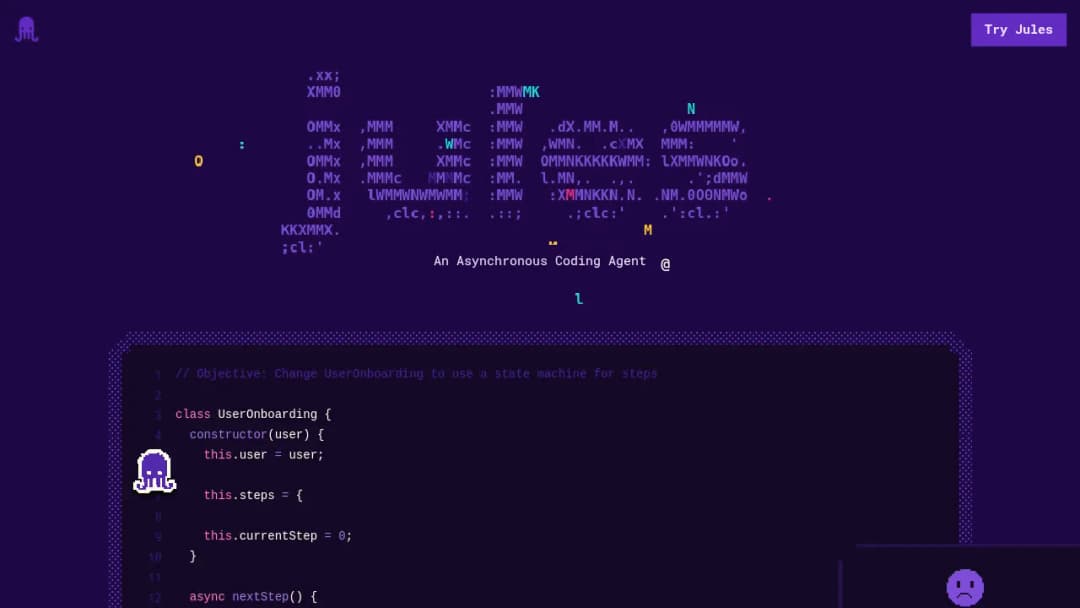
Jules is Google Labs' autonomous coding agent that connects to a GitHub repository, clones it into a cloud VM, plans and implements code changes, runs build and test steps, and opens pull requests for human review.
Published Oct 14, 2026
Get a comprehensive analysis of Jules including market position, competitive landscape, adoption trends, and peer benchmarks.
Download full report →When you require enterprise-grade compliance documentation upfront
When you need high-throughput autonomous automation
When you need local-first, interactive development
npm run dev) and iterative rapid feedback, IDE-native agents (Copilot/Cursor) may fit better.When reliability/availability is a hard requirement
When organizational procurement cannot use personal Google accounts
Limitations acknowledged by the vendor
Known issues reported by users (community)
Roadmap signals