mjPro
India's largest B2B eCommerce company
India's largest B2B eCommerce company
Published Oct 14, 2026
Public reviews accessible in this research include few explicit churn narratives. However, plausible churn drivers suggested by negative reviews include:
Reviewers repeatedly mention:
Important sampling caution: The visible review set on some platforms is relatively small and/or may include incentivized submissions, so it may not represent the full distribution of user experience.
mjPRO’s public site shows several enterprise customer logos and short testimonials from companies in sectors such as rail/engineering, pigments/chemicals, and large engineering services. These appear as brief testimonials without transparent methodology, baseline metrics, or independent verification.
Vendor materials and reviews reference use across:
Get a comprehensive analysis of mjPro including market position, competitive landscape, adoption trends, and peer benchmarks.
Download full report →Consider alternatives or require detailed validation if any of the following apply:
From Capterra (examples):
From G2 (examples):
From Capterra (examples):
mjPRO marketing claims measurable savings and faster processes but lack visible public methodology. Without:
Recommendation for buyers: Request case studies that include before/after KPIs (cycle time, compliance, savings), number of events and suppliers, implementation timeline, and how savings were computed and audited.
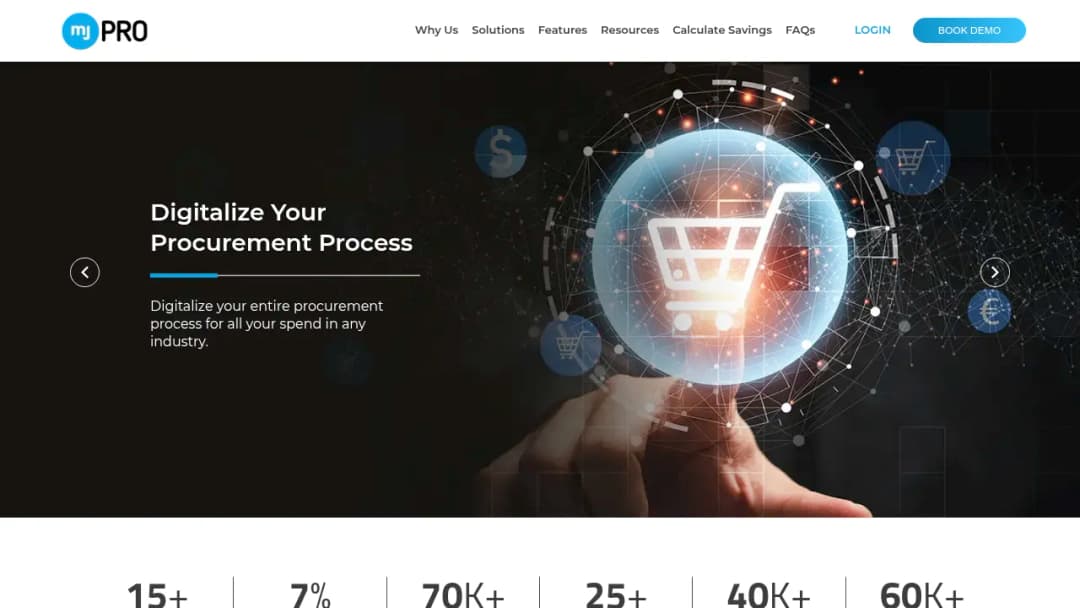
mjPRO is a cloud-based eProcurement / Source-to-Pay (S2P) platform that covers the procurement lifecycle. Based on vendor descriptions, it supports procurement activities from planning and requisitioning through sourcing (RFx, supplier management, reverse auctions/negotiations), to purchase orders and downstream receiving and invoice / 3‑way matching and payment support. The platform is described as offering configurable workflows, templates, and an embedded supplier ecosystem with analytics and auction capability.
Vendor materials also assert outcome improvements such as procurement cost reductions, faster procurement cycles, high delivery compliance, and reduced fraud and process deviations. These outcomes are vendor-asserted and are not accompanied by public methodology or independent validation on the public site; treat them as vendor claims rather than independently verified benchmarks.