Zinfi
Partner Marketing Automation
Partner Marketing Automation
Published Oct 15, 2026
Across review snippets and metadata, common selection drivers include:
Inferred drivers for churn include:
In the materials reviewed for this run, vendor press releases and review-site feedback were the primary evidence. A dedicated, detailed library of quantified case studies was not captured in the reviewed excerpts.
Review metadata shows representation in:
Get a comprehensive analysis of Zinfi including market position, competitive landscape, adoption trends, and peer benchmarks.
Download full report →From review evidence (G2 and Capterra):
Roadmap items and future feature dates were not extracted from the public sources in this review.
Interpretation caution: Extremely high aggregate ratings can reflect high customer satisfaction but may also reflect reporting or sampling bias (e.g., partner users vs. admins, incentivized review drives). Review distribution and lower-star commentary should be examined.
G2 (positive):
G2 (critical):
Capterra (positive):
Capterra (critical):
Recommendation: If case studies are an important part of procurement, request:
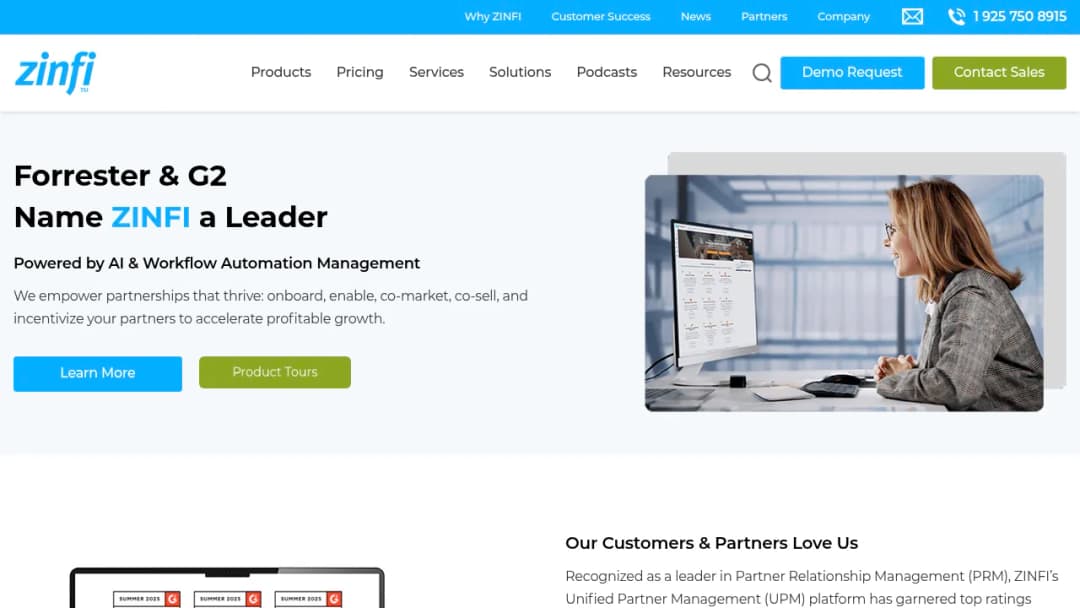
ZINFI is a B2B SaaS platform focused on Partner Relationship Management (PRM) and Through-Channel/Partner Marketing Management (often positioned as TCMA/PMM). The platform is intended for vendors that sell via channel partners (resellers, distributors, MSPs, SIs, affiliates) and provides a single solution to manage the partner lifecycle: recruitment/onboarding, enablement/training, deal/lead management, marketing co-op/MDF workflows, incentives, and partner performance analytics.
On G2, the product is listed as ZINFI Unified Partner Management (UPM) under PRM software, with Value at a Glance showing an implementation timeline of about two months.
ZINFI is positioned for enterprise and mid-market organizations as a Unified Partner Management (UPM) suite (i.e., broader than a simple partner portal) with partner marketing automation and partner sales workflow capabilities.
Review metadata indicates a user base spanning small business through enterprise, with review volume skewing toward small and mid-market usage and a measurable enterprise segment. This distribution suggests notable adoption among smaller organizations and departments within larger firms, rather than exclusive Fortune 500–scale deployments.