Dropbox Reclaim
AI scheduling for a perfect workweek.
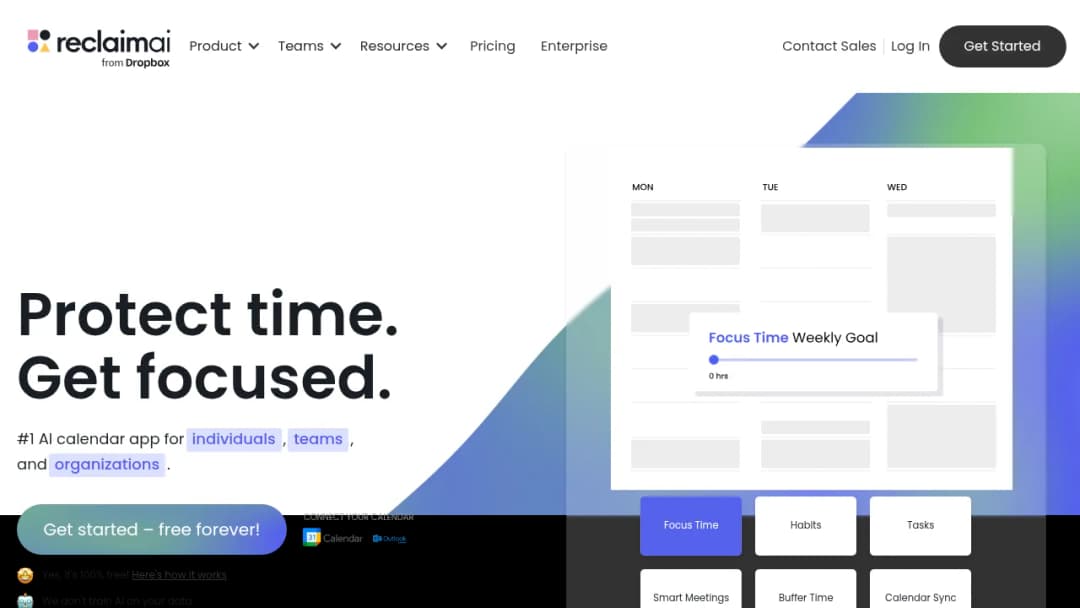
AI scheduling for a perfect workweek.
Published Oct 15, 2026
Reported reasons for adoption include perceived lower price versus some competitors, the ability to operate within existing Google/Outlook calendars rather than requiring a new task/project hub, and cross-calendar synchronization for users who manage multiple accounts.
From independent review platforms, recurring positive themes include automation combined with prioritization and dynamic rescheduling, perceived value versus some alternatives, and multi-calendar management for users with multiple accounts.
From vendor-selected testimonials, executives and product leaders have been quoted describing improved focus protection and team cadence; vendor-published testimonials should be treated as curated examples rather than representative outcomes.
Common inferred churn reasons include perceived invasiveness or trust concerns, calendar clutter or duplication issues, trial/billing UX confusion, and the absence of a native mobile application.
Vendor materials present quantified outcomes such as aggregated focus-time gains and weekly productivity deltas. These metrics appear to be vendor-modeled; buyers should request methodological details and third-party validations where necessary.
Vendor published testimonials and leadership quotes appear on marketing pages and should be treated as supporting anecdotes rather than representative or independently verified evidence.
Likely strongest adoption where calendar load and knowledge work intensity are high: software/technology, professional services, consulting, operations-heavy teams, and startups.
Reclaim targets:
Positioning themes in vendor materials emphasize protecting scheduled focus time, reducing meeting overload and context switching, and integrating with existing calendar and task ecosystems.
Get a comprehensive analysis of Dropbox Reclaim including market position, competitive landscape, adoption trends, and peer benchmarks.
Download full report →Consider alternatives when:
Mobile-first scheduling is mandatory: the vendor does not provide native mobile applications; competitors advertise native mobile apps.
iCloud calendar is a first-class requirement: the vendor's documentation indicates only indirect iCloud support with potential delays.
There is significant concern about sharing calendar data with third parties or strong privacy/regulatory constraints: public community comments include skepticism about third-party calendar access and some negative reviews allege invasive behavior.
Non-US data residency is a requirement: vendor-hosted data is indicated as located in US AWS regions.
An all-in-one task/project execution suite is required: some competitors provide consolidated task, document, and project management features beyond calendar automation.
No native iOS/Android applications: Official documentation confirms the absence of native mobile apps and notes web-based workarounds.
iCloud limitations: iCloud support is indirect and may involve significant sync delays.
Duplicate-event perception: The vendor documents why duplicates appear and provides guidelines to reduce calendar clutter.
Security documentation gating: SOC 2 and penetration test reports are referenced but access requires Trust Center workflow.
Marketing metrics methodology unclear: Prominent productivity improvement claims are presented without complete public methodological transparency; buyers should request details.
From public review platforms, recurring negative themes include:
Vendor materials include productivity and focus-time metrics and an ROI-style calculator that suggests weekly productivity gains. These metrics are presented at a marketing level without complete methodological transparency.
Critical evaluation:
Reclaim (Reclaim.ai), now owned by Dropbox, is an AI-assisted calendar optimization and scheduling product focused on:
The vendor describes the product as a calendar-focused automation layer that augments Google/Outlook calendars rather than replacing them with an all-in-one work hub. The product website includes quantified productivity claims; these figures are vendor-published and the underlying methodologies are not consistently visible on public marketing pages.