Workspace
    • Briefing
    • Ask Airframe
    Transformation
    • Audit
    Your Stack
    • Registry
    • Finance
    • Context
    Discover
    Powered by Airframe
    1. Research
    2. /
    3. Products
    4. /
    5. TalentLMS
    TalentLMS

    TalentLMS

    Perfect Practice Makes Perfect

    Est 2017|112 Ref Customers
    LinkedIn 245|Web traffic 2.8M|FTEs 4|HQ Riyadh, RIY, SA
    MarketsCustomer Education & EnablementLearning Management System (LMS)
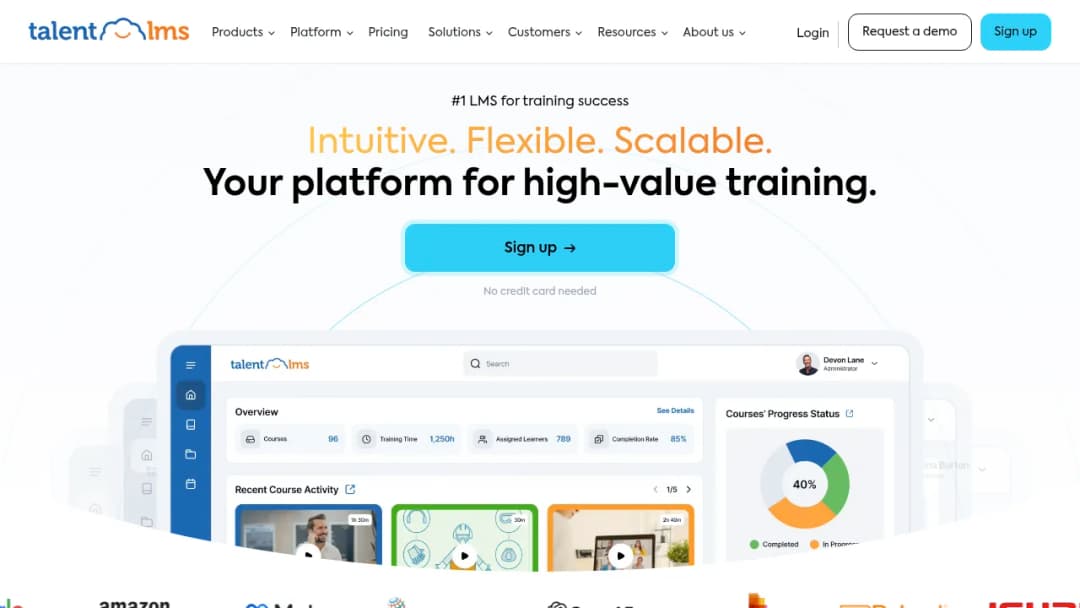
    TalentLMS screenshot
    FirmCompareTractionAnalysisAdvocates

    Insights

    All insightsAccountingFinanceSoftwareCustomer experience

    Benchmarks

    The Software LeaderboardMethodology

    Tools & data

    Market ExplorerStudioRegistry

    Company

    AboutCareers

    Legal

    Privacy PolicyTerms of Service

    © 2026 Airframe, Inc. All rights reserved.

      Published Oct 15, 2026

      01Competitive Landscape

      | Aspect | TalentLMS | Docebo | LearnUpon | |--------|----------|--------|-----------| | Starting Price | Public list pricing (example Core shown at published per-period pricing; exact tier varies by active users) | Pricing typically quote-based and sales-led; public list prices are not straightforward | Pricing tends to be sales-led; public list price not a simple single rate | | Best For | SMB/mid-market that requires rapid setup, a low-friction trial, and straightforward internal training or lighter external portals | Mid-market/enterprise requiring advanced learning ecosystems, stronger AI/analytics, and multi-audience scale | Organizations seeking enterprise-oriented extended enterprise capabilities and integration services | | Key Strength | Rapid time-to-trial, publicly listed pricing tiers, and practical LMS features (courses, reporting, automations) | Broad enterprise feature set, configurable ecosystem, and advanced analytics | Enterprise-focused portal capabilities and services-oriented buying motion | | Key Weakness | Perceived as limited for complex academies; integration depth and content portability may be weaker | Higher cost and greater implementation complexity; sales cycles can be longer | Pricing opacity and potential TCO concerns for small teams | - Direct competitors and their key differentiators - Docebo: positioned for enterprise deployments with a broad ecosystem and advanced analytics; pricing generally requires sales engagement. - LearnUpon: positioned for organizations that use learning as a central growth lever; pricing and packaging often involve direct sales engagement. - Absorb LMS: quote-based pricing with modules targeted at larger deployments and reporting needs. - Feature comparison: where this product excels vs lags behind? - Excels - Rapid trial/startup with public pricing and relatively straightforward setup for basic training programs. - Administrative features adequate for basic internal training (course management, standard reporting, and simple automations). - Branching model to segment audiences without separate LMS contracts (subject to plan limits). - Lags - Advanced external academy controls and commerce features compared with some enterprise or commerce-focused competitors. - Deep integration capabilities and some HRIS connectors have been reported as limited in reviews. - Native content portability/export for in-platform authored courses appears weaker than approaches emphasizing SCORM or export-first strategies. - Pricing comparison: value proposition vs alternatives - TalentLMS: public pricing with active-user logic, potentially attractive for SMB use cases. - Docebo / Absorb / LearnUpon: often quote-based, higher TCO for comparable enterprise-grade functionality but potentially less operational risk for complex requirements. - Customer testimonials comparing this product to competitors - Community discussions sometimes describe organizations moving from heavier enterprise stacks to lighter-administration platforms such as TalentLMS when administrative overhead becomes a burden. - Market share and adoption trends - Vendor-published team count indicates a large installed base. - Independent market share statistics were not identified in the sources accessed during this run. - When customers choose competitors instead (and why) - Organizations choose Docebo/Absorb/LearnUpon when they require complex extended-enterprise commerce/controls, enterprise analytics, multi-system integration, or strict compliance packaging. - Organizations choose Moodle/Totara when they prefer open-source control, deeper customization via partners, or to avoid per-active-user SaaS scaling.
      AspectTalentLMSDoceboLearnUpon
      Starting PricePublic list pricing (example Core shown at published per-period pricing; exact tier varies by active users)Pricing typically quote-based and sales-led; public list prices are not straightforwardPricing tends to be sales-led; public list price not a simple single rate
      Best ForSMB/mid-market that requires rapid setup, a low-friction trial, and straightforward internal training or lighter external portalsMid-market/enterprise requiring advanced learning ecosystems, stronger AI/analytics, and multi-audience scaleOrganizations seeking enterprise-oriented extended enterprise capabilities and integration services
      Key StrengthRapid time-to-trial, publicly listed pricing tiers, and practical LMS features (courses, reporting, automations)Broad enterprise feature set, configurable ecosystem, and advanced analyticsEnterprise-focused portal capabilities and services-oriented buying motion
      Key WeaknessPerceived as limited for complex academies; integration depth and content portability may be weakerHigher cost and greater implementation complexity; sales cycles can be longerPricing opacity and potential TCO concerns for small teams
      • Direct competitors and their key differentiators

        • Docebo: positioned for enterprise deployments with a broad ecosystem and advanced analytics; pricing generally requires sales engagement.
        • LearnUpon: positioned for organizations that use learning as a central growth lever; pricing and packaging often involve direct sales engagement.
        • Absorb LMS: quote-based pricing with modules targeted at larger deployments and reporting needs.
      • Feature comparison: where this product excels vs lags behind?

        • Excels
          • Rapid trial/startup with public pricing and relatively straightforward setup for basic training programs.
          • Administrative features adequate for basic internal training (course management, standard reporting, and simple automations).
          • Branching model to segment audiences without separate LMS contracts (subject to plan limits).
        • Lags
          • Advanced external academy controls and commerce features compared with some enterprise or commerce-focused competitors.
          • Deep integration capabilities and some HRIS connectors have been reported as limited in reviews.
          • Native content portability/export for in-platform authored courses appears weaker than approaches emphasizing SCORM or export-first strategies.
      • Pricing comparison: value proposition vs alternatives

        • TalentLMS: public pricing with active-user logic, potentially attractive for SMB use cases.
        • Docebo / Absorb / LearnUpon: often quote-based, higher TCO for comparable enterprise-grade functionality but potentially less operational risk for complex requirements.
      • Customer testimonials comparing this product to competitors

        • Community discussions sometimes describe organizations moving from heavier enterprise stacks to lighter-administration platforms such as TalentLMS when administrative overhead becomes a burden.
      • Market share and adoption trends

        • Vendor-published team count indicates a large installed base.
        • Independent market share statistics were not identified in the sources accessed during this run.
      • When customers choose competitors instead (and why)

        • Organizations choose Docebo/Absorb/LearnUpon when they require complex extended-enterprise commerce/controls, enterprise analytics, multi-system integration, or strict compliance packaging.
        • Organizations choose Moodle/Totara when they prefer open-source control, deeper customization via partners, or to avoid per-active-user SaaS scaling.